
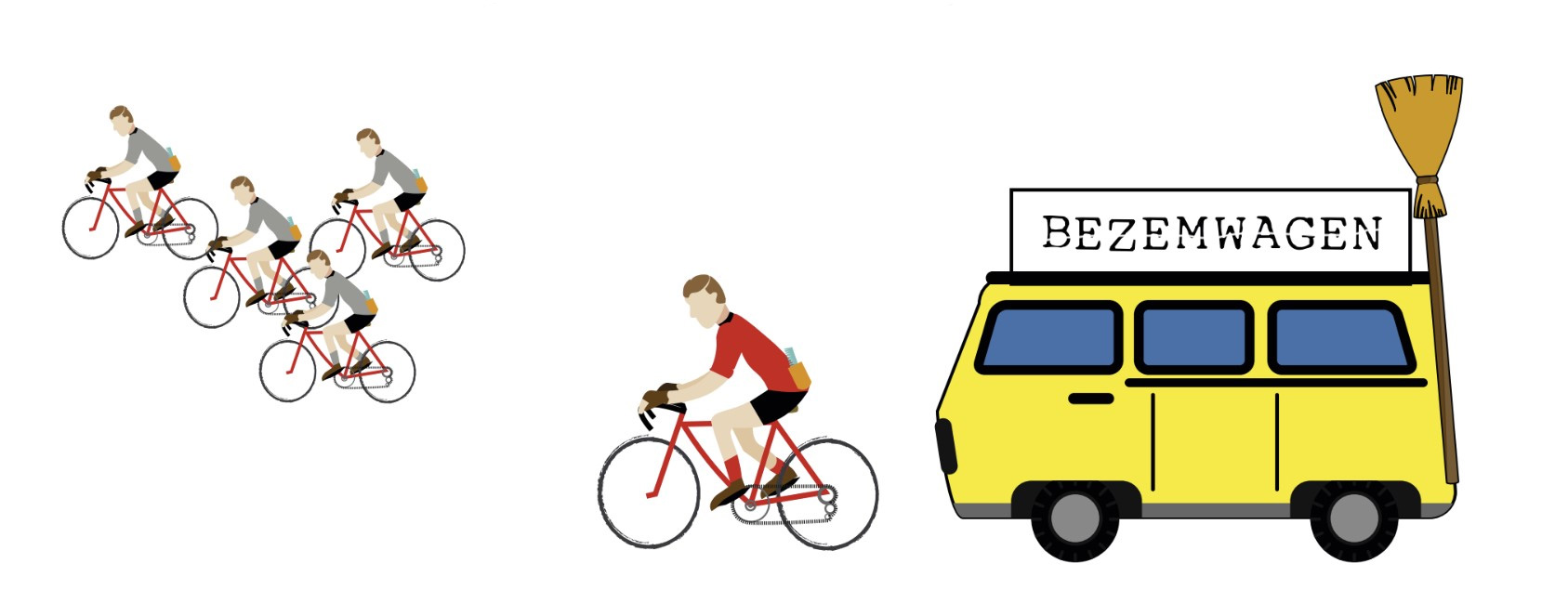
In the world of cycling, there are many iconic images and moments that have captured the hearts of fans around the world. One such striking image is the broom wagon that is always behind the peloton during cycling races. While this car often goes unnoticed by most spectators, it plays a crucial role in supporting the riders. In this blog, we dive deeper into the story behind the broom wagon in cycling and discover why this vehicle is - more importantly, was - much more than just a ‘tidier’.
What is the broom wagon?
The broom wagon, also known as the “voiture balai” in French, is a support vehicle that rides behind the peloton during professional cycling races, such as the Tour de France. The broom wagon's job is to support the riders and deal with situations where riders cannot continue or are excluded from the race. It also plays a crucial role in enforcing the time limits that determine which riders are allowed to continue the race. Meanwhile, the role of the broom wagon has changed completely. Nowadays, every team has its own equipment and food with it, doctors are plentiful in the race and when a rider dismounts, they immediately disappear into their own team car. But the role of the broom wagon was once a lot more important:
The Role of the Broom Car
1. Catching exhausted or injured riders
One of the main functions of the broom wagon was to provide assistance to riders who were exhausted or injured during the race. Cycling is an extremely demanding sport and riders can face physical and mental challenges. The broom wagon acted as a kind of mobile medical post, where riders could receive first aid and, if necessary, further medical examination.
2. Breakdown support
The peloton can sometimes be plagued by bad luck, such as flat tyres or technical problems with the bikes. The broom truck provided a quick solution by offering spare bikes and technical support to the affected riders. This allowed them to quickly resume the race and avoid falling completely behind.
3. Time limits Enforce
Each stage of a cycling race has a set time limit. Riders must finish within this limit to stay in the race. If a rider falls behind and exceeds the time limit, he can be taken out of the race. The broom wagon keeps a close eye on the time limits and takes riders off the course who fail to meet the limits. Nowadays, the broom wagon mainly serves as a kind of symbolic last car in the race.
The symbolic aspect
The broom wagon also has a symbolic meaning in cycling. It represents the determination and perseverance of every rider, regardless of their position in the race. For many cyclists, following the broom wagon is a humbling experience because it means they are out of the competition. However, some riders refuse to give up and continue their fight even when they are about to be taken out of the race. This determination to keep going despite setbacks is what cycling is all about and it is what makes the sport so inspiring. To add to the symbolic aspect of the wagon, brooms are often attached to the back of the broom wagon, making it clearly recognisable to supporters as well.
Conclusion
The broom wagon in cycling was much more than just a ‘cleaner’. It was an indispensable support vehicle that played a crucial role in supporting riders, providing help in case of breakdown and enforcing time limits. It also represented the perseverance and determination of every cyclist, regardless of his place in the race. So, the next time you watch a cycling race and see the broom wagon pass by, know that it is much more than just a car behind the peloton. It is a symbol of the true spirit of cycling.
Have you been inspired by the broom wagon? Then the arriere de la course socks really something for you!






Leave A Comment