
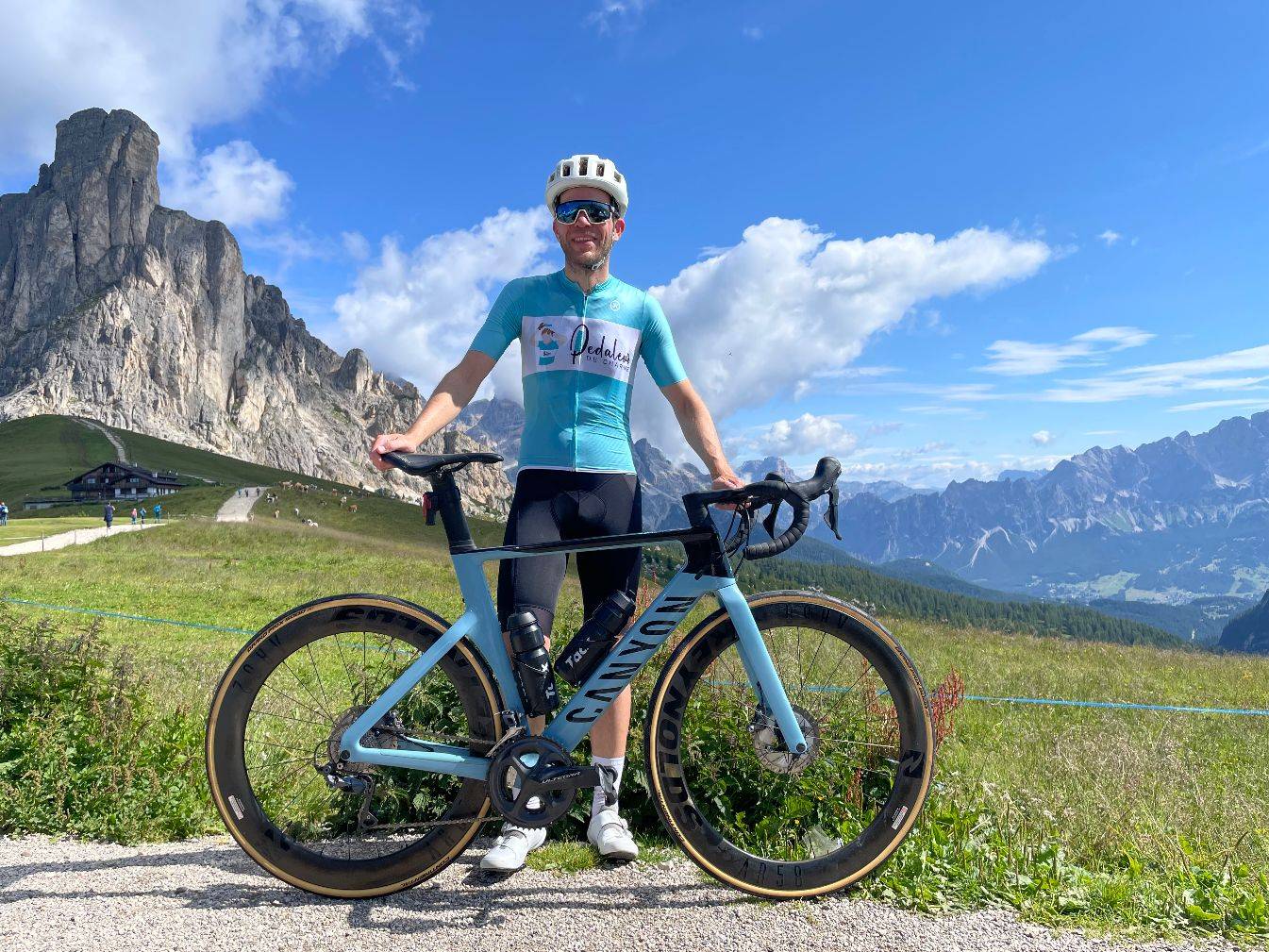
La Marmotte, Les Trois Ballons, the Dragon Ride, the Tour of Flanders. Or, domestically, the Amstel Gold Race and the Elfstedentocht. As lovers of beautiful (touring) tours, we have completed a lot of them, with some requiring a bit more training than others, of course. A very nice one that was still missing is the Maratona dles Dolomites, the Dolomites Marathon.
Until this summer then, as Pedaleur Jelger headed to northern Italy to cycle this legendary ride. You can read what he thought of it here!
With a group of friends, we try to schedule a nice cycling trip every year. One time it might be a long weekend, and (if all the busy family lives permit) the following year another week.
As lovers of epic bike rides, the Dolomites Marathon was still high on our wish list. So we booked a cottage, piled up the cars full of bikes and set off. With a bit of a setback, it takes 18 hours on the road from North Holland, but hey, you have to give something for a beautiful cycling environment.
Loners
At just under 140 kilometres, the Marathon is probably one of the shortest of all those monster rides. The Marmotte was almost 200 kilometres (counting the descent of Alpe d'Huez), after the Trois Ballons the counter even read 230 kilometres. The number of altimeters - 4,200 - is not bad.
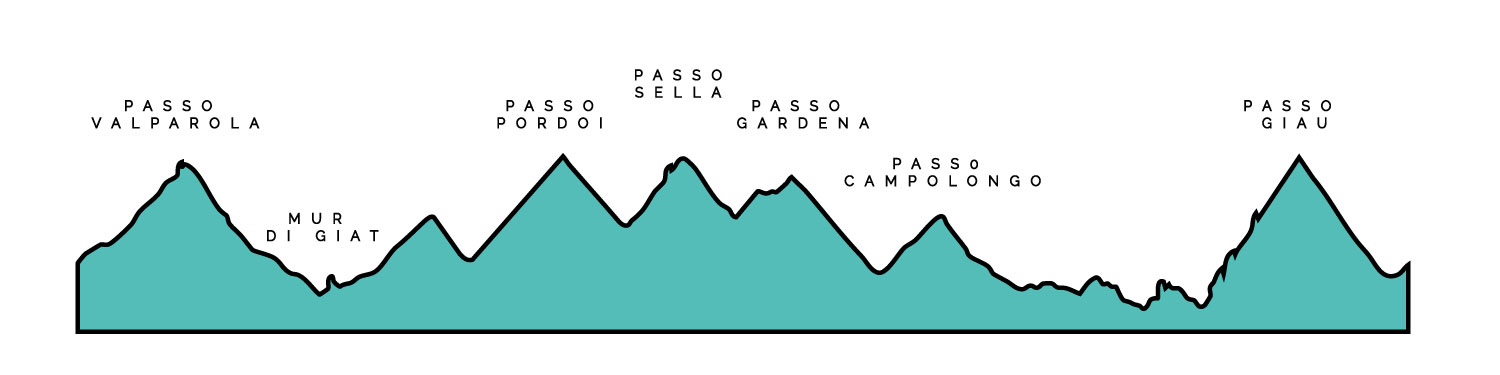
As it can rain heavily in the mountains, we chose the driest day to do the trek. With the expectation beforehand that it would be a bit ‘every man for himself’ anyway. In any case, our group of friends consists of loners with their own preferences (“I want to have an extensive lunch!”, “No, we'll get something at a bakery and ride straight on!”) and the course also makes it difficult to ride together for a long time. Whereas the Marmotte still has dozens of kilometres of reasonably flat valley, the Marathon is up-down-up-up-down. So tricky with different climbing and descending speeds. The profile says enough in that respect:
Keutenberg
What makes the Marathon (even) spicy(er) is precisely that constant ascending and descending. The climbs are not super long, at most an hour for a reasonable cyclist, but immediately after an intense (because crowded and twisty) descent, the next mountain looms. And sometimes there is an extra spicy short section in it. Like the Mur DL Giat, the Cat's Wall, at up to 19 per cent a slightly shorter version of the Keutenberg.
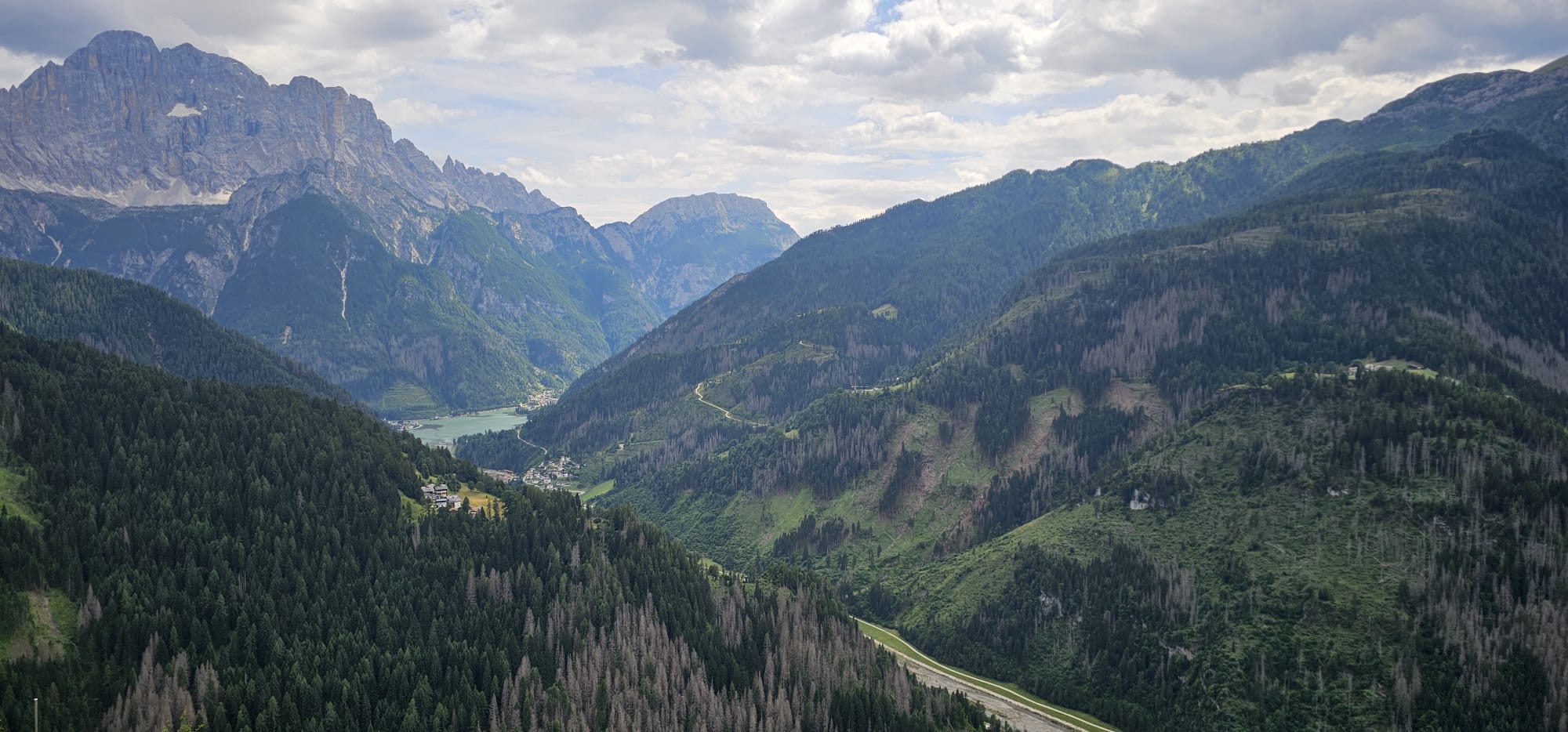
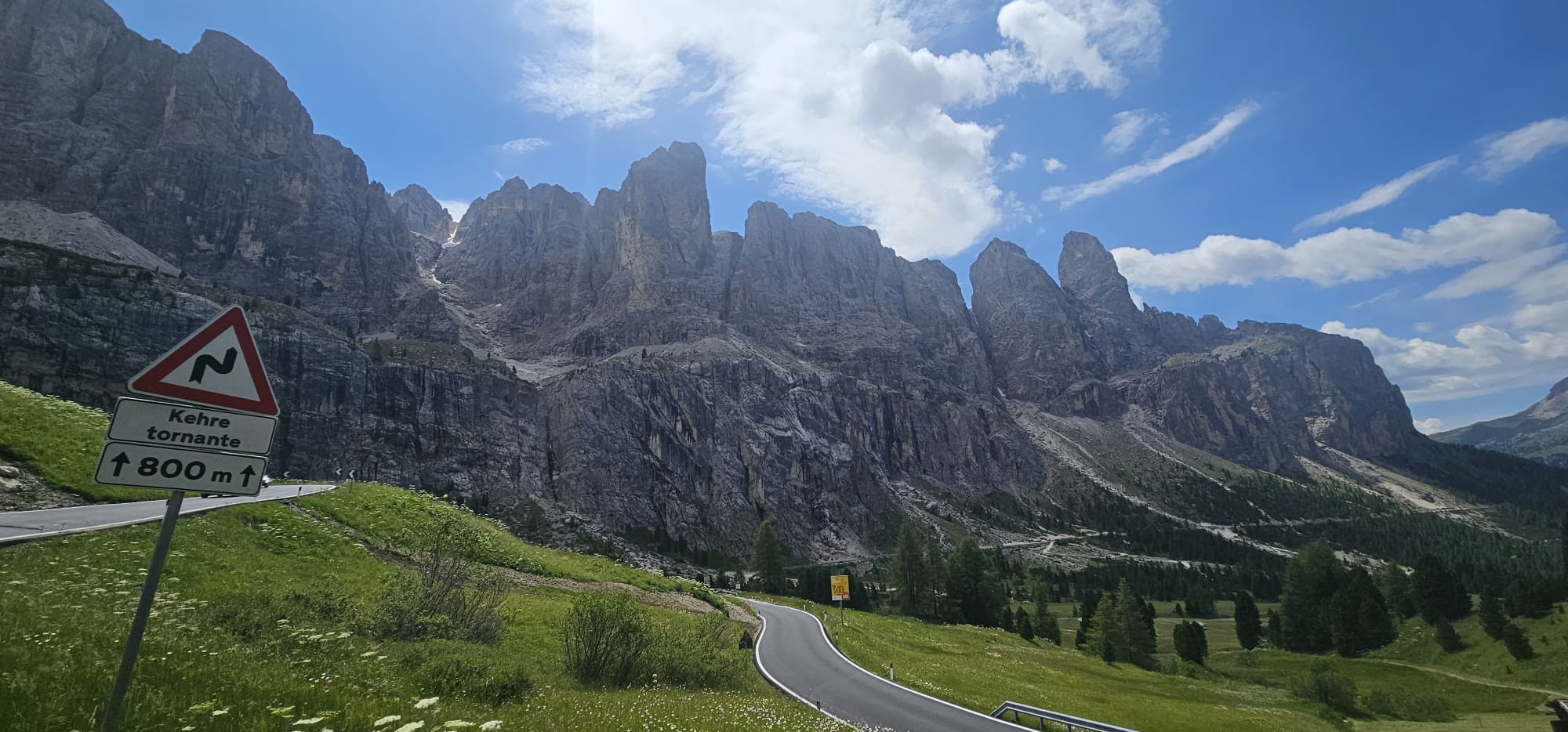
The scenery is beautiful, especially on a bright day like ours. Nature is very rugged and you are constantly cycling between steep rock faces. In terms of traffic and roads, it could be better: during the descent of Passo Valparola, for example, we had to get off our bikes as many as five times for traffic lights or road breaks.
(A few days earlier, we were confronted with an extreme example of this, but these photos are an aside).
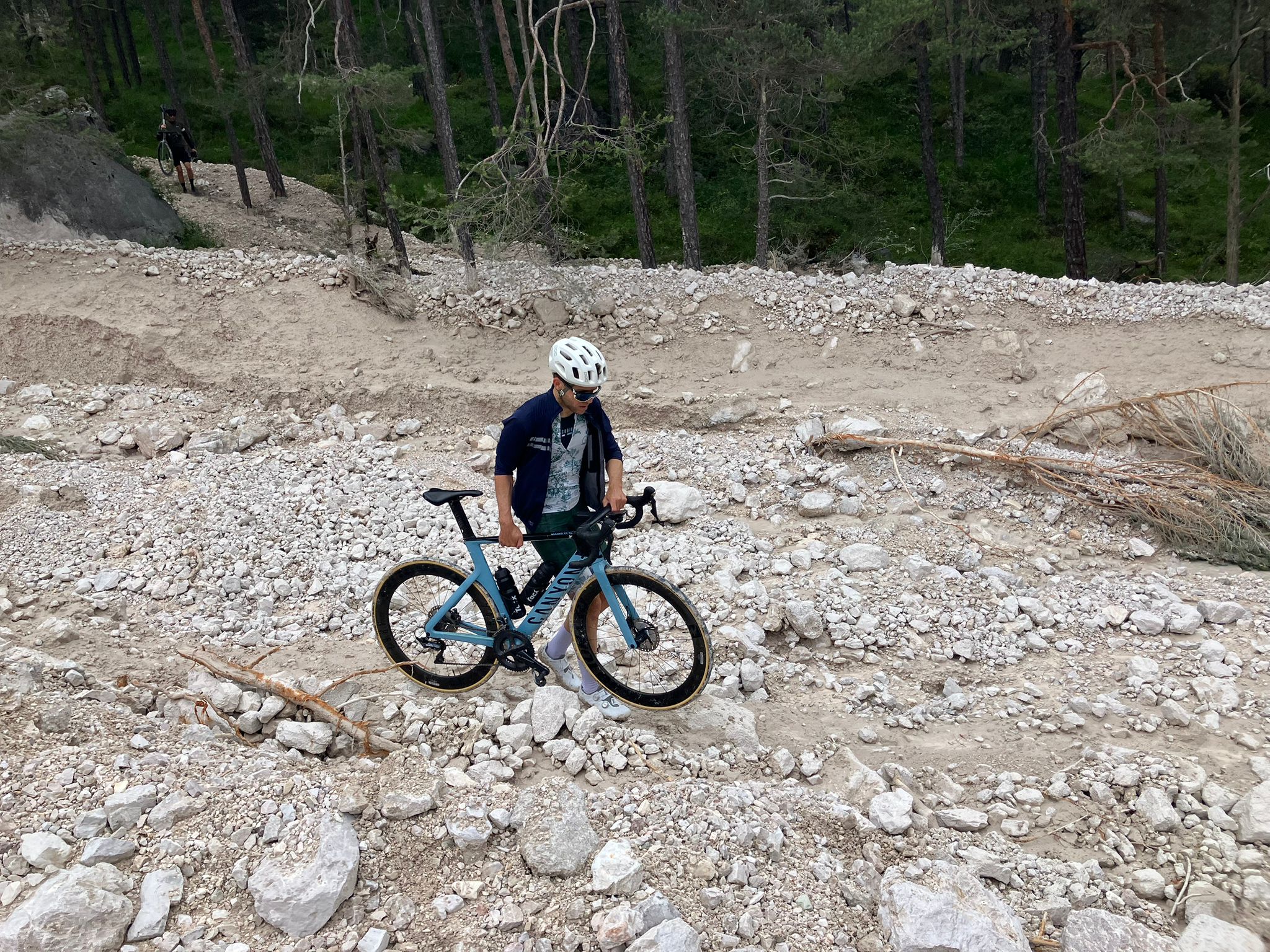
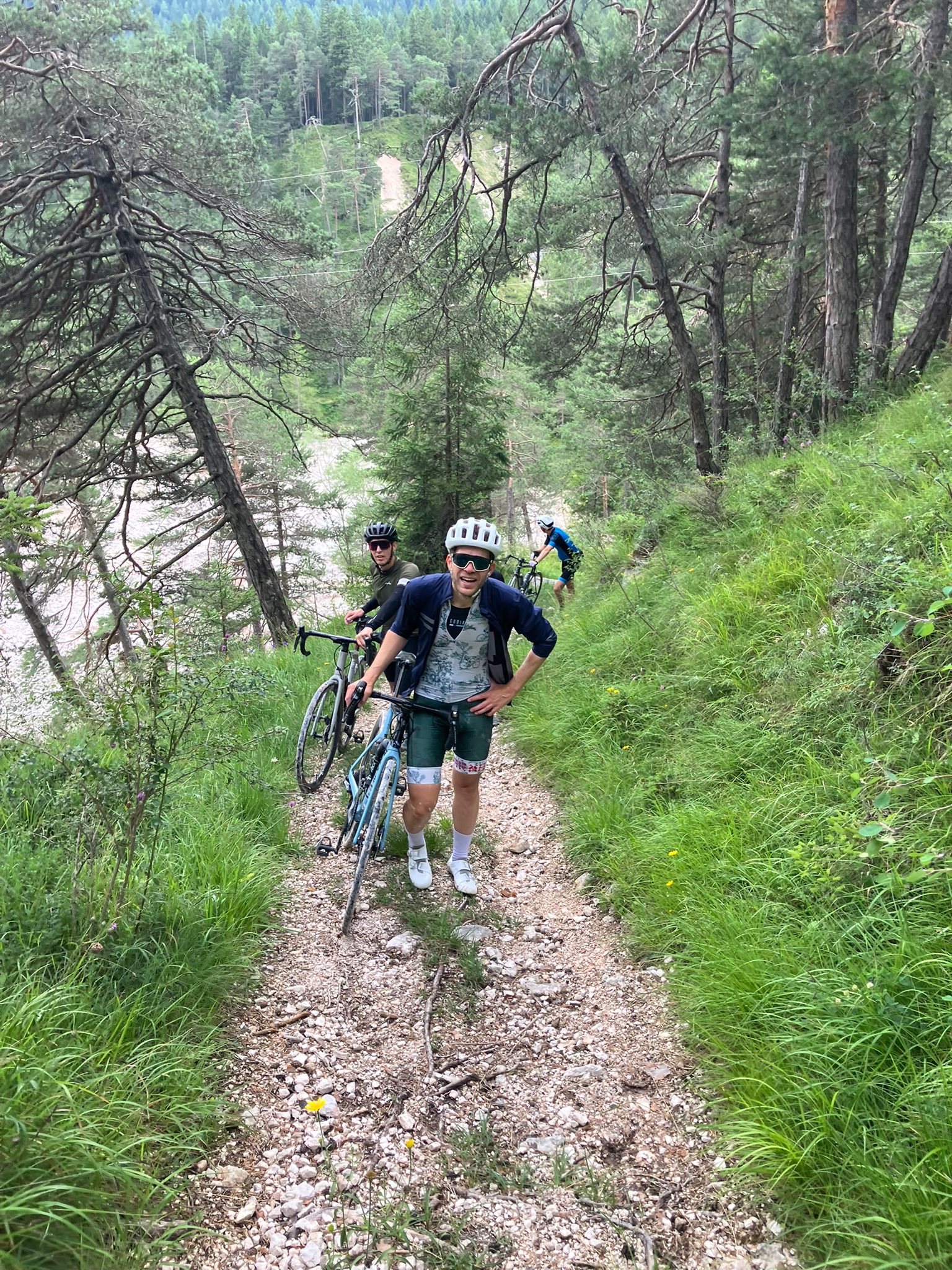
At times it was also busy with traffic on the road, but thankfully that improved the higher up the mountains you went.
Passo Giau
With that, the cons were actually mentioned. The ride was a fantastic experience and fortunately there were plenty of moments along the way when we could still meet for a coffee break or a quick lunch.
At the end, it was a bit of a struggle. We had the tough Passo Giau as our last climb, as we did not start the tour at the official start. A 10-kilometre climb that rarely gets below 9 per cent, that's a tough finish when you already have 3,300 altimeters on it.
But afterwards, we could look back on a wonderful day with pleasure. And perhaps already thinking about the next destination.
Any suggestions?




Nice writing! A great achievement!